By Bianca Kapteyn
A garden isn’t just for us humans – dogs can find joy in it too. From nibbling on safe veggies, to simply lounging in the sun, your dog can be part of your gardening life in both funny and heartwarming ways.
Many pet caregivers love sharing their harvest, but its important to know what’s truly safe is key. Dogs can safely enjoy raw bell peppers, cauliflower, lettuce, pumpkin, squash, sweet potatoes, and green leafy vegetables like spinach, cabbage, green beans, Brussels sprouts, beetroot, and even broccoli (in moderation).
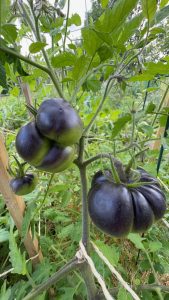
But not everything growing in your garden is safe for canine companions. Tomatoes, for instance, are a summer favourite for humans, but not for dogs. The ripe fruit is less concerning in small amounts, yet the green parts—the stems, leaves, and unripe fruit—contain solanine and tomatine, toxins that can upset your dog’s stomach or worse. Keep tomato plants out of reach or cordon them off if your dog likes to forage.
Other common garden plants that can pose risks include: Onions, garlic, chives, and leeks (part of the Allium family) , contains compounds that can cause damage to a dog’s red blood cells. – toxic to dogs whether raw or cooked.
Rhubarb leaves – contain oxalates harmful to kidneys.
Grapes and raisins – are toxic to dogs, which can cause kidney failure. The exact toxic compound in grapes and raisins is still being researched, but its believed to be tartaric acid. The ASPCA Animal Poison Control Centre is actively researching/investigating why grapes and raisins are toxic to dogs.
Avocado plants – all parts of the plant contain Persin, a fungicidal toxin, toxic to animals, including birds, horses , cattle, goats , rabbits, and rodents. Dogs and cats are not as sensitive to Persin as other animals. But large amounts of the fruit / seeds can cause gastrointestinal upset, vomiting, diarrhea.
Nightshade plants like potatoes (green parts) and eggplants – carry similar risks to tomatoes.
Be cautious with fertilizers and mulches too—especially cocoa mulch, which contains theobromine, toxic to dogs. Made from cocoa bean shells, dogs can be attracted to the sweet smell of cocoa mulch, small amounts can cause vomiting, diarrhea, and potentially fatal seizures.
Dogs make everything better—including gardening—but sharing your harvest needs to be thoughtful. Plant safe treats where your dog can nibble without worry, or offer garden snacks yourself as part of their enrichment.
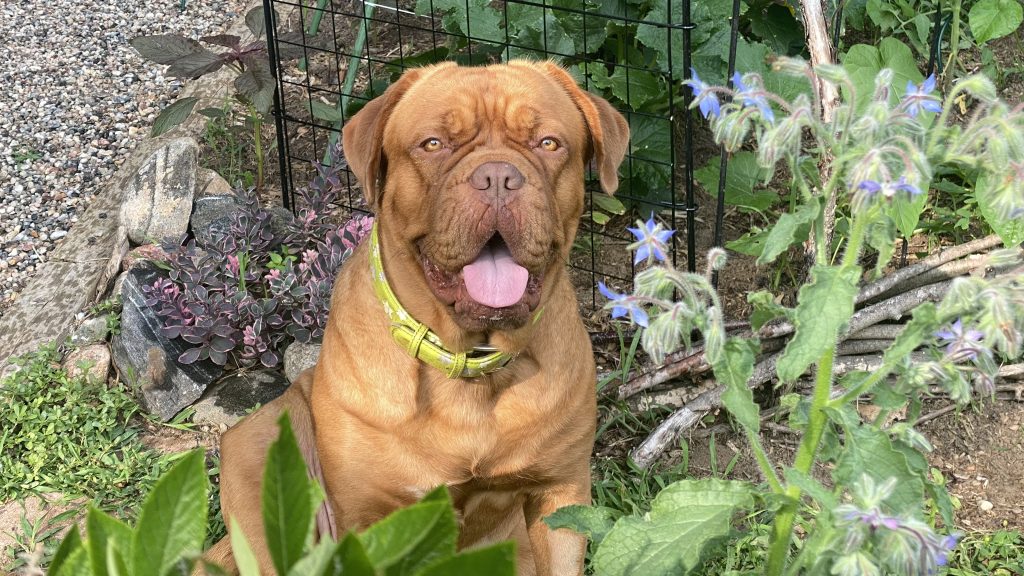
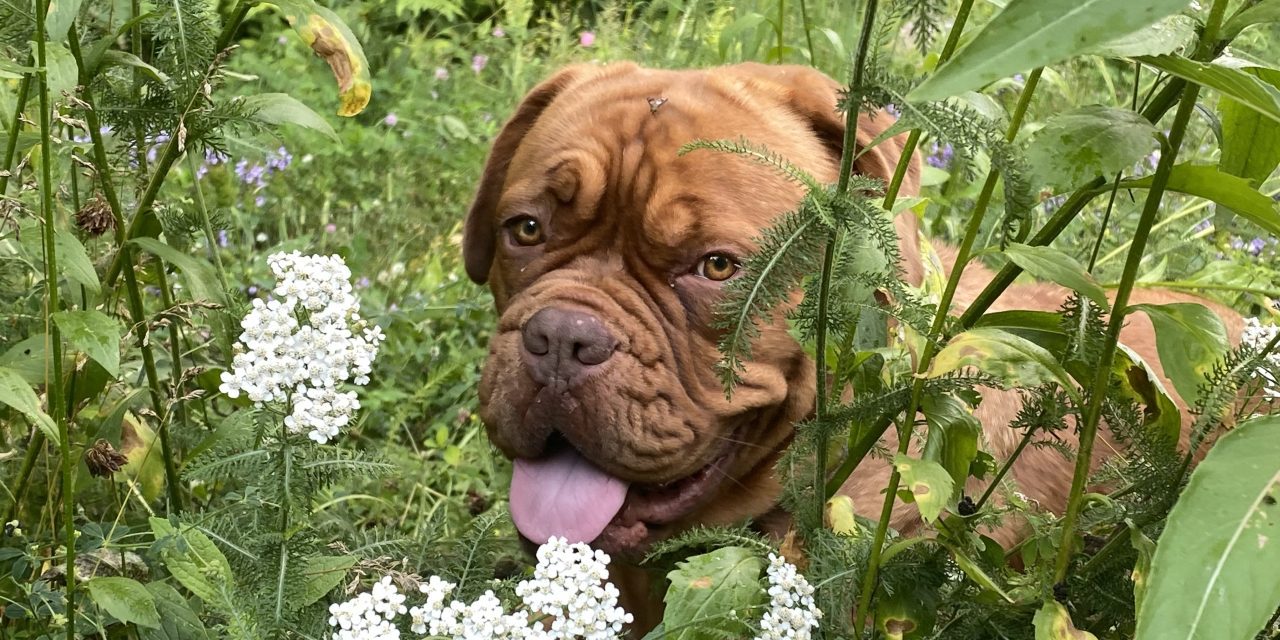
French-born visual artist Isabelle Hémard, who lives off-grid in Tamworth, Ontario, understands the joy of sharing the garden with her dog. Living sustainably with her partner Brent, their chickens, Muscovy ducks, rabbits, two cats named George and Gaston, and Bella, a Dogue de Bordeaux, she says: “She’s French like me. We have a special connection. We both enjoy the garden, listening to nature, and smelling the flowers.”
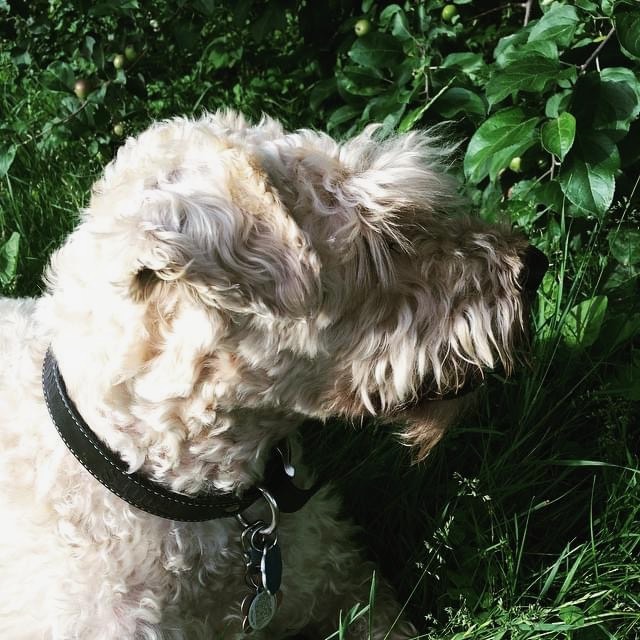
When my own dog Otis was alive, he loved to “help” in the garden—nibbling the tender new grass and waiting patiently for his share of fresh green beans, his absolute favourite. Like Otis, many dogs love to be part of your time outdoors, whether supervising your planting or simply soaking up the sun.
Gardening with your dog isn’t just about growing plants. It’s about cultivating shared moments, and creating a safe, joyful space you both can enjoy. Bon appétit

Photo courtesy by Isabelle Hémard of Bella.
Photo courtesy of Otis by Bianca Kapteyn.