By Bianca Kapteyn
From silent-film curiosities to Hollywood superstars and computer-generated characters, dogs have captivated audiences for more than a century. Digital technology is transforming the canine performance — and raising questions about what makes a movie dog feel real.
Like many of us these days, I stream a lot of films. After watching DC’s Supergirl with my dog-loving husband, Jim Slotek, founder of the film site Original-Cin.ca, we talked about the effectiveness of Krypto the Superdog’s fully digital performance.
The CGI execution of a comic-book canine sent me down a rabbit hole — tracing how we got from real-life movie dogs to pixels and uncovering just how embedded dogs are in the motion picture industry.
For more than a century, dogs have held a firm grip on the movie going imagination.
According to Guinness World Records, dogs appeared in 1,304 films in which they played a significant enough role to be mentioned in the plot summary, as of February 2024. That’s a remarkable legacy for canines stealing scenes, driving box-office records and anchoring major motion pictures since the beginning of cinema.
Today, as digital visual effects push screen performance into increasingly sophisticated territory, the canine actor is undergoing a transformation. It begs the question: What, exactly, makes a dog on screen feel real?
Before pixels, there were paws
Long before digital technology could render a photo-realistic coat or simulate the subtle movements of an expressive gaze, screen magic depended on natural canine talent, patient trainers and handlers working just off-camera.
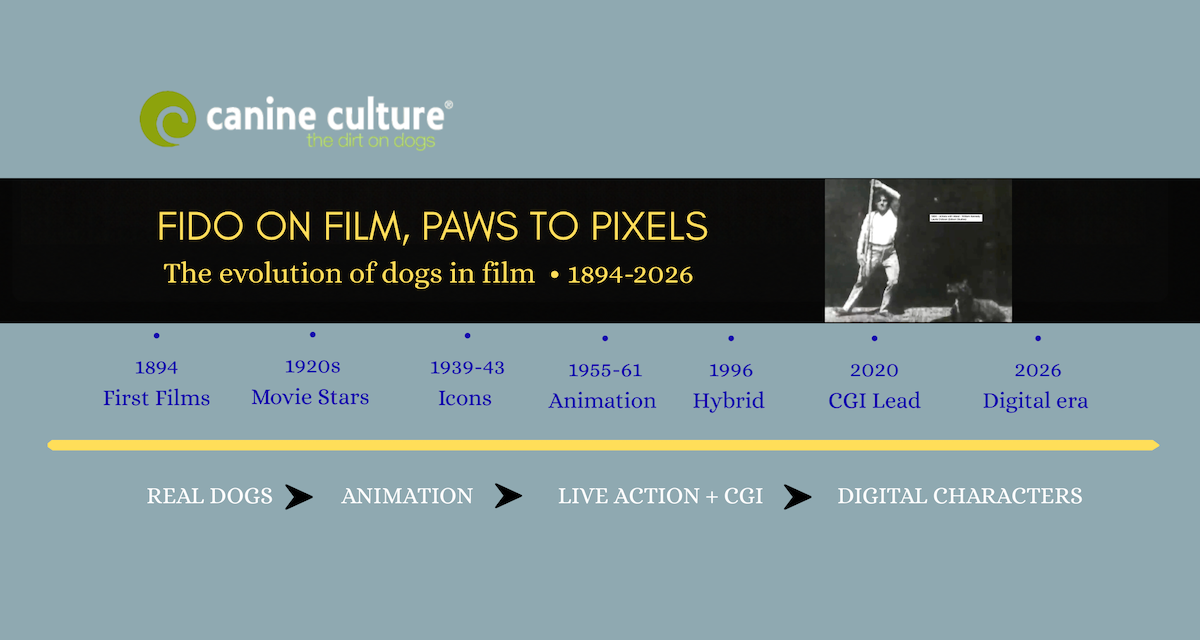
Strays and working dogs appeared in films from the earliest days of cinema. One of the earliest examples captured on film appears in Thomas Edison’s 1894 short Athlete with Wand, in which an unscripted dog watches an athlete exercising with a long stick. A year later, a stray dog wanders through the scene in the Lumière brothers’ Workers Leaving the Lumière Factory in Lyon (1895), one of the landmark films of early cinema.
These were incidental appearances rather than scripted performances, but they offered an early glimpse of the spontaneous charm animals could bring to the moving image. Dogs were sharing the frame with humans long before anyone imagined the modern Hollywood animal star.
It wouldn’t take long for filmmakers to recognize their potential.
When dogs became box-office stars
Public domain via Wikimedia Commons
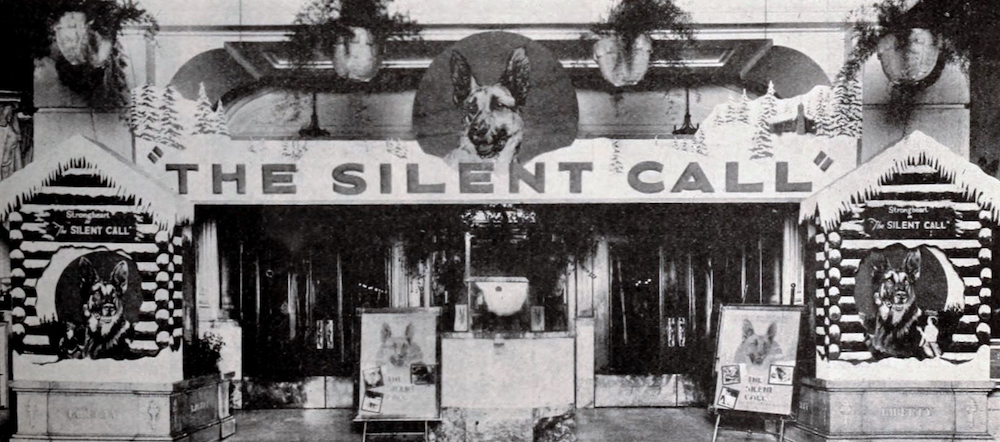
Before the advent of the talkies in the late 1920s, Hollywood’s canine A-listers were treated like superstars. A German Shepherd named Strongheart starred in The Silent Call (1921), helping establish his place among the decade’s celebrated canine performers alongside Rin Tin Tin.
Strongheart, whose real name was Etzel von Oeringen, went on to enjoy a successful film career. His athleticism and imposing presence made him one of the era’s most celebrated canine performers.
Public domain via Wikimedia Commons
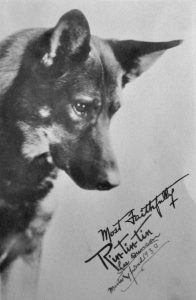
Rin Tin Tin’s story was equally remarkable. Rescued as a puppy from a First World War battlefield in France by American serviceman Lee Duncan, the German Shepherd was brought to the United States and trained for performance. His athletic ability and expressive screen presence soon caught Hollywood’s attention.
Financially, both German Shepherds were among the highest-paid and most lucrative animal stars of the 1920s, reportedly earning more than some of their human co-stars. Strongheart’s total earnings have been estimated at $2.5 million, while Rin Tin Tin’s earnings reportedly peaked at around $6,000 a week. Rin Tin Tin starred in 26 films for Warner Bros.
Throughout the 1920s, “Rinty” became a bona fide box-office star. He is often credited with helping Warner Bros. survive a precarious financial period, demonstrating that audiences would pay to see a dog carry a film rather than simply support its human leads.
Rin Tin Tin helped establish a tradition of canine-led adventures that would continue for generations. His appeal rested on more than tricks or obedience. He could convey courage, vulnerability and determination through movement and his interactions with human actors.
Public domain via Wikimedia Commons
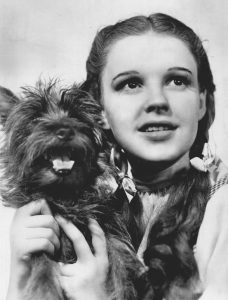
In 1939, a Cairn Terrier named Terry stepped into cinematic history as Toto in The Wizard of Oz. As Dorothy’s loyal companion in a strange Technicolor world, Toto was integral to the story’s emotional appeal.
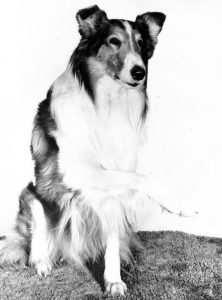
Four years later, Lassie Come Home (1943) introduced audiences to the Rough Collie who would become one of the most enduring canine characters in popular culture. Lassie’s stories of loyalty, courage and devotion helped define the ideal of canine heroism for generations of film and television viewers.
Public domain, via Wikimedia Commons
These early stars didn’t rely on synthetic perfection. Their power lay in physical presence, natural behaviour and the spontaneous reactions of a living animal responding to its surroundings.
A wagging tail, an alert ear, a hesitant step or a look toward a human co-star could communicate emotion without dialogue. Sometimes, the most memorable moment was the one no one had planned.
That unpredictability remains one of the great attractions of working with real dogs.
From animation to digital doubles
The idea of an artificial dog on screen predates computer-generated imagery by decades.
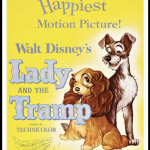
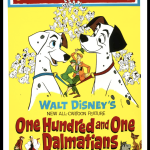
Traditional animation had already demonstrated that audiences could form powerful emotional connections with canine characters created entirely by artists. Disney’s Lady and the Tramp (1955) gave its dogs expressive personalities and a world of their own, while One Hundred and One Dalmatians (1961) brought a multitude of animated puppies into a family adventure.
These films weren’t trying to pass animated dogs off as real animals. Instead, animation gave filmmakers complete creative control over movement, expression and storytelling.
Live-action cinema presented a different challenge: How could a synthetic animal convincingly share a frame with human actors and appear to inhabit the same physical world?
As computer-generated imagery (CGI) developed, the possibilities expanded. Artists could build digital models, create realistic coats and movements, and integrate artificial animals into live-action footage.
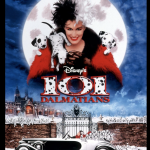
The live-action 101 Dalmatians (1996) marked an important step in this hybrid approach. The production combined real dogs with computer-generated puppies, demonstrating how digital effects could supplement live animal performances and expand the canine cast.
CGI wasn’t necessarily intended to banish real dogs from sets. It offered filmmakers another option — one that could provide scale, flexibility and greater control over complex scenes.
As the technology improved, however, digital artists became increasingly ambitious. The goal was no longer simply to add a puppy to a scene. It was to create a canine character that could carry a story.
When the dog isn’t there
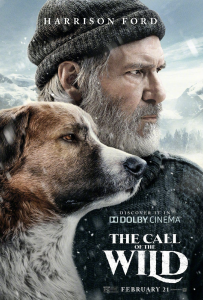
A significant milestone arrived with The Call of the Wild (2020), starring Harrison Ford.
Based on Jack London’s classic novel, the film follows Buck, a dog taken from his comfortable domestic life and thrust into the harsh conditions of the Yukon during the Klondike Gold Rush.
In this adaptation, Buck was a computer-generated character rather than a live dog performing the role on set. The filmmakers used scans of a real dog named Buckley as a reference for Buck’s appearance, while actor and movement performer Terry Notary provided physical reference for Buck’s actions and interactions.
Animators then created the digital character, shaping his movements and expressions to serve the story. Notary’s work informed the performance, but Buck’s final movements were crafted through animation rather than simply transferred from a real dog.
The result was a canine protagonist capable of carrying an entire film. Buck could run through dangerous terrain, confront wild animals and take part in demanding action sequences without requiring a real dog to perform those stunts.
Digital creation gave the filmmakers considerable control over the character’s expressions and timing, allowing them to shape a performance in ways that would be difficult to achieve consistently with a live animal.
Buck illustrated one of the challenges of CGI dogs. Some viewers appreciated the character’s expressiveness, while others felt that his facial movements occasionally became too human-like, undermining the realism the production was trying to achieve.
It’s a fine line. We want to understand what a dog is feeling, but we also want it to behave like a dog.
A computer can render individual strands of fur and simulate the movement of muscles, but convincing audiences that a digital animal is real requires an understanding of canine behaviour, not simply technical wizardry.
Krypto and the next generation of canine performers
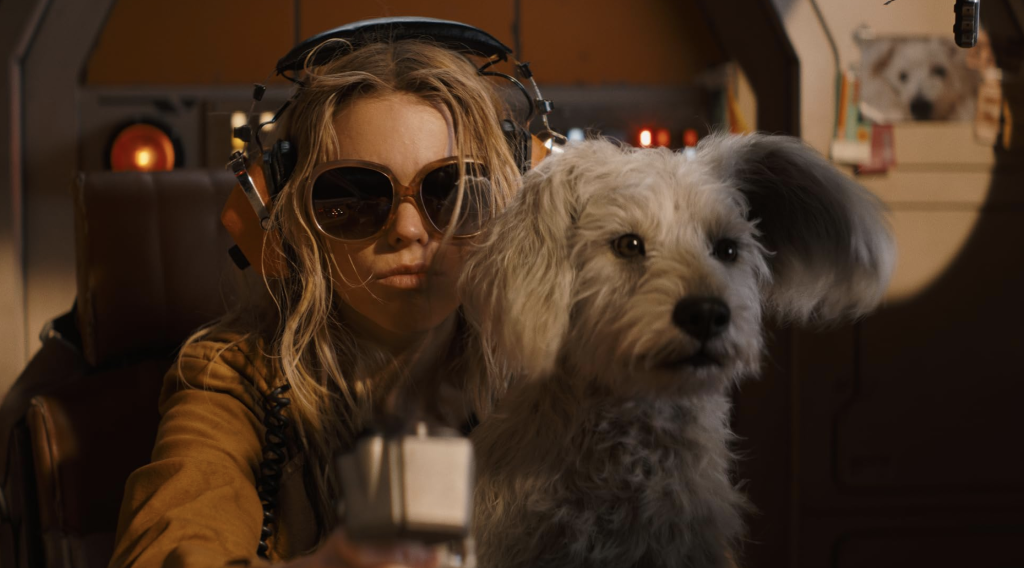
Watching Supergirl brought that challenge into focus for me. Krypto is a comic-book character with superpowers, so his digital nature makes sense within the film’s fantastical world. Yet his effectiveness still depends on something familiar: the audience’s ability to connect with a dog.
Krypto’s screen journey also illustrates how quickly digital canine characters have become part of contemporary superhero cinema. Following his appearance in Superman (2025), Krypto returned in Supergirl (2026), demonstrating how a digital dog can become a recurring character within a larger fictional universe.
What’s particularly interesting is that a fully digital character doesn’t necessarily mean a production has no real animals involved.
Live dogs can provide visual and behavioural reference for digital artists, helping them understand how a dog moves, reacts and interacts with people. That reference can then inform a character whose final on-screen performance is created through CGI.
The real and digital worlds can therefore work together. A living dog provides the physical reference — the movement, the behaviour and the small details that make a canine recognisable — while visual-effects artists create a character capable of doing things no ordinary dog could do.
For filmmakers, the advantages are clear. A digital dog can perform dangerous stunts, appear in extraordinary environments and repeat precisely choreographed actions. Digital doubles can also reduce the need to expose live animals to certain demanding or stressful situations.
There are animal-welfare implications, too. When a scene would put a real dog at risk, digital effects may offer a more appropriate alternative.
But CGI isn’t automatically a guarantee of ethical filmmaking, nor does it make live canine performers obsolete. Digital characters require considerable creative and technical resources, and a real dog’s spontaneity, physical presence and individual personality can be difficult to reproduce.
The future may well be a combination of the two: live dogs for natural interactions and familiar canine behaviour, with digital doubles used when a scene requires something beyond an animal’s capabilities.
What makes a movie dog real?
For more than a century, dogs have helped filmmakers tell stories about courage, companionship, loyalty and the bond between humans and animals. Their screen appeal has survived changes in filmmaking technology, audience expectations and the very nature of movie going.
From Strongheart and Rin Tin Tin’s silent-era heroics to Toto’s adventures in Oz, Lassie’s unwavering devotion and Buck’s digitally created journey into the wilderness, the canine performer has continually adapted to the changing world of cinema.
Now, the question is no longer whether filmmakers can create a convincing digital dog. They can. The more interesting question is how far that technology can go — and whether audiences will always be able to tell, or even care, which dogs are real.
For me, Krypto was the prompt to look back at more than a century of canine cinema. The deeper I dug, the clearer it became that this isn’t simply a story about technology replacing an animal with pixels. It’s about the evolving ways filmmakers capture the qualities that make dogs so compelling in the first place.
A digital dog may have a perfectly rendered coat, expressive eyes and movements refined frame by frame. But the real test is whether the character makes us feel something.
The next great movie dog might be a living animal, a digital creation or a collaboration between the two. Whatever form it takes, its success will depend on more than technical wizardry. It will depend on that familiar connection between dog and audience — the magic that has kept canine stars in the spotlight for more than a hundred years.