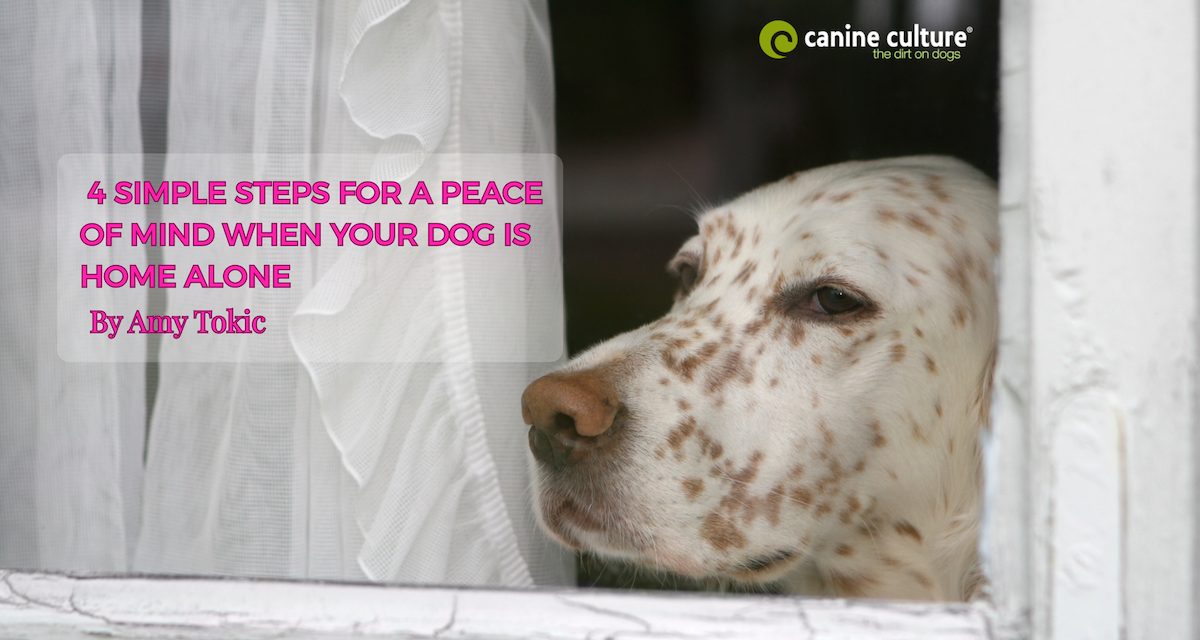
By Amy Tokic
If you’re a pet parent, you’ve probably worried about what could go wrong while you’re out of the house. It’s only natural — your dog’s safety is always on your mind when you have to leave them behind. Sure, a dog left alone can sometimes get into trouble, but don’t stress too much. There are simple steps you can take to keep your pup safe and sound while you’re away.
Use Pet tech to Keep an Eye on Your Dog
Pet tech has really come a long way, and there’s a bunch of cool options now that help you stay connected with your furry friend, wherever you happen to be.
If you’re a pet parent who gets a little anxious leaving your dog home alone, even just for a few hours, dog cameras and monitors are honestly a game changer. An interactive pet camera lets you peek in on your pup throughout the day right from your phone. You can even toss them a dog treat remotely, just so they know you’re thinking about them.
You can also use a dog GPS collar, or even set up an alarm system that alerts you if your dog manages to escape. That way you can keep tabs on where your dog is and what they’re up to, and you’ll get a heads-up right away if they somehow get out of the house.
Consider Hiring a Dog Walker/Pet Sitter
If you know you’ll be out of the house for longer stretches during the day, it’s really worth thinking about hiring a dog sitter or walker.
It’s important to keep your dog’s routine as consistent as possible, even when your own schedule shifts around. That routine isn’t just a nice-to-have — it’s a real part of your dog’s overall health and happiness. Dogs genuinely thrive on routine.
So if your schedule’s changing, or you’re going to be away from home more than usual, it’s worth putting in the effort to keep your dog’s day-to-day as close to normal as you can, or at least easing them into the new schedule gradually. That’s another place where a dog sitter can really help. They can keep your pup’s routine steady, or help them adjust to a new one gradually, without adding a bunch of unnecessary stress along the way.
Create a Safe Space with Crate Training
Crates are honestly one of the best tools for keeping your dog out of trouble when you’re not home, especially if your pup tends to get into things or has a destructive streak.
If your dog isn’t already crate-trained, take it slow. Ease them into it and focus on building positive associations, so the crate feels like a cozy safe space instead of a punishment.
One trick: try feeding your dog in the crate, at least until they start looking forward to going in there. You can even hold back a little bit of their food to use as a reward when they head into the crate on their own.
Crate your dog when you leave for work in the morning, then let them out when you get home for lunch. Or, if that’s not doable, have a dog sitter or walker swing by around midday to take them out.
Another option is to block off just one area of the house — like the kitchen or a bathroom — using dog gates instead of a crate. If you go this route, make sure to dog-proof the space: put child locks on cabinets and keep anything toxic or dangerous well out of reach. Stick with rubber toys over plush ones in this setup, since they hold up better and are tougher for your dog to tear apart and get bored of.
And whichever option you choose, just make sure your dog has easy access to water the whole time.
Keep Your Dog Entertained While You’re Away
When you’re not around, your dog might get a little creative looking for ways to entertain himself. Dogs get into things they normally wouldn’t touch when you’re there to stop them. Basically, boredom kicks in, and chewing becomes the go-to activity.
The fix? Give your pup something good to chew on before he picks something you’d rather he didn’t. Interactive toys and chew toys are great options — they keep your dog’s brain busy, not just his jaws, which makes them perfect for those home-alone hours.
And don’t underestimate a little background noise. Leaving the TV on, or playing something calming through a speaker or radio, can help take the edge off an empty house.
Home alone time doesn’t have to be a big deal for your dog — with a little prep, they can actually handle it just fine. It really comes down to a few things: easing them into alone time gradually, setting up a safe space for them, and giving them stuff to do while you’re gone. Do that, and most dogs settle in and wait for you calmly.